|
Getting your Trinity Audio player ready...
|
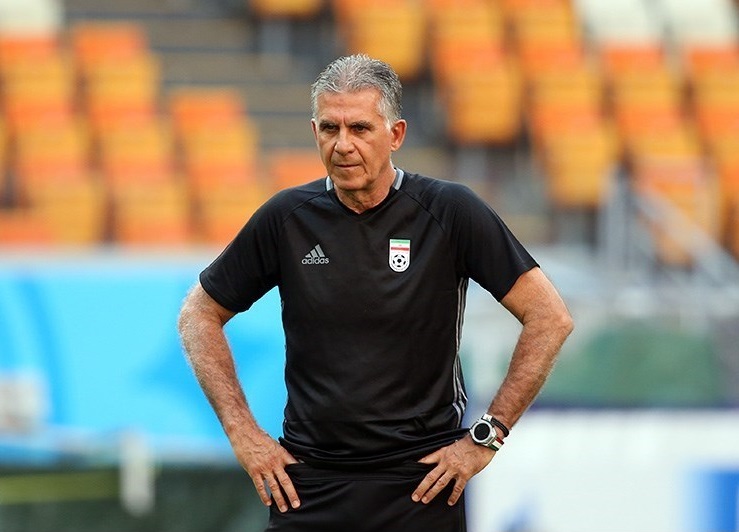
Ghana’s decision to retain Carlos Queiroz as Black Stars head coach marks a deliberate attempt to prioritise continuity at a time when the national team is entering another important phase of its international programme.
The Ghana Football Association (GFA) has reached an agreement with the Portuguese tactician for a fresh mandate, ending speculation over whether the coach would remain in charge after his previous spell expired a few weeks ago.
Queiroz’s new agreement follows discussions between the GFA, the coach and the Ministry of Sports and Recreation. According to the football governing body, he is expected to begin the new assignment during the upcoming international window.
The decision is significant because Ghana has opted against another coaching transition, choosing instead to keep a manager who already understands the squad, its strengths and its weaknesses.
Why the GFA chose continuity
The GFA has pointed to three major factors behind the decision: Queiroz’s international experience, his technical credentials and his familiarity with the Black Stars.
Those considerations carry weight for a national team that has struggled for stability in recent years. Ghana has gone through several coaching changes, with each new appointment bringing a different tactical philosophy, different player preferences and, in some cases, a fresh rebuilding exercise.
Retaining Queiroz removes at least one layer of uncertainty.
The Portuguese coach does not need to start from scratch. He has already worked with the players and experienced the pressures surrounding the Black Stars. That familiarity could allow him to spend more time refining the team rather than learning its internal dynamics.
For the GFA, the calculation appears to be that the benefits of continuity outweigh the temptation to bring in another coach with a completely different approach.
The World Cup factor
Queiroz’s previous mandate included leading Ghana at the recently concluded FIFA World Cup, making his retention particularly interesting.
A World Cup campaign inevitably places a coach under intense scrutiny, especially in Ghana, where expectations surrounding the Black Stars remain exceptionally high. The tournament also gives a coach an opportunity to assess players under the most demanding competitive conditions.
Keeping Queiroz suggests the GFA believes the experience gained during that campaign can be useful in shaping the next chapter.
However, continuity by itself will not satisfy supporters. The renewed mandate will ultimately be judged by results, performances and the direction of the team.
Ghanaian fans have become increasingly impatient with inconsistency from the national side. The Black Stars will therefore enter the next phase with Queiroz carrying not only the advantage of familiarity but also the responsibility of proving that the decision to retain him was the right one.
What must change?
The most important question is not simply whether Queiroz stays, but what he does with the opportunity.
A fresh mandate should provide room for tactical refinement, stronger squad competition and a clearer pathway for emerging players. Ghana needs a team capable of competing consistently rather than one that relies heavily on individual moments or short bursts of form.
Queiroz will also have to manage the balance between experienced players and the younger generation. The Black Stars cannot afford to remain trapped between rebuilding and competing. The next phase requires both.
The GFA, meanwhile, must ensure that the coach has the institutional support necessary to implement his plans. A national team coach cannot be expected to deliver sustained progress if technical decisions are repeatedly disrupted by administrative uncertainty.
A fresh start, not simply an extension
The GFA has yet to reveal the full details of Queiroz’s new mandate, including its precise scope and the Black Stars’ upcoming programme. That information will be crucial in determining how the new era is structured.
For now, the message is clear: Ghana has chosen stability.
The coming international window will provide the first real indication of whether that decision can translate into progress. Queiroz knows the environment, knows the players and now has another opportunity to shape the Black Stars.
What Ghana needs from him is not merely familiarity, however. It needs evidence that the continuity can produce a stronger, more organised and more competitive national team.
The next phase will therefore be less about why Queiroz was retained and more about what he delivers with the second chance.